Solo in the Washpool
It was the first week of my summer holidays, but the schools were still in their final week. That meant I could enjoy some solace on the hiking trails. Decompress from an unusually intense period at work. Alone in the land of Gondwana rainforests. There was also a strange attraction that glared at me from the topographical map - a distinct straight line running from Washpool National Park southwards through Newton Boyd National Park and beyond – a geological scar of sorts.
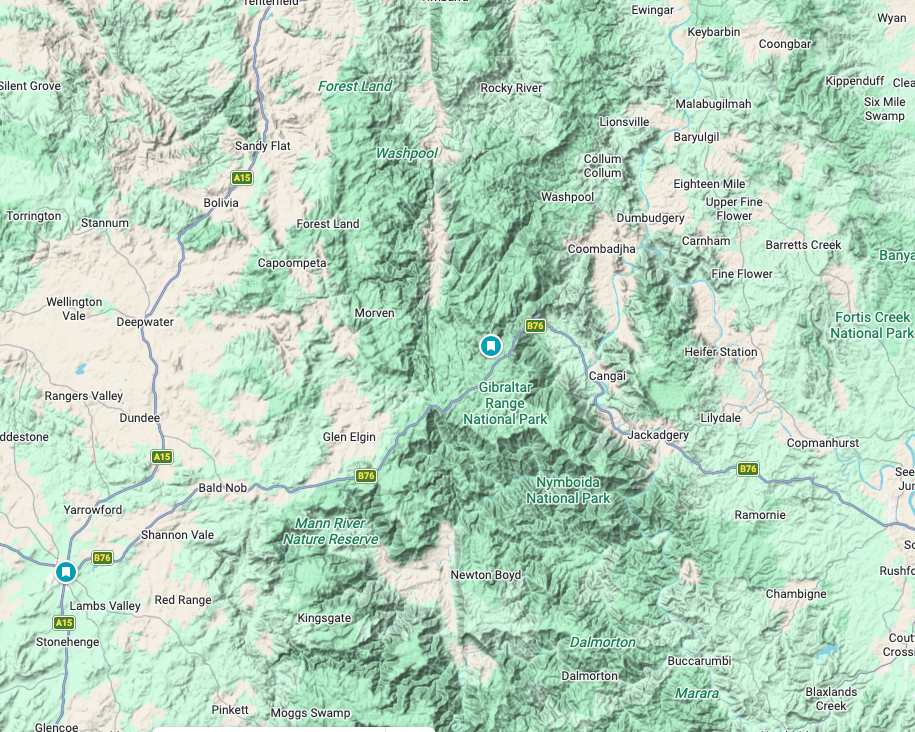
I had chosen the Coombadjha campsite in Washpool because it only has three tent sites and a drop toilet. No noisy families or big RVs. No water either, but instead a stunning rainforest creek. On the NPWS website there was a photo of a fire pit and table in a forest glade and another of a tent pitched on some grass. It would be perfect for my needs.
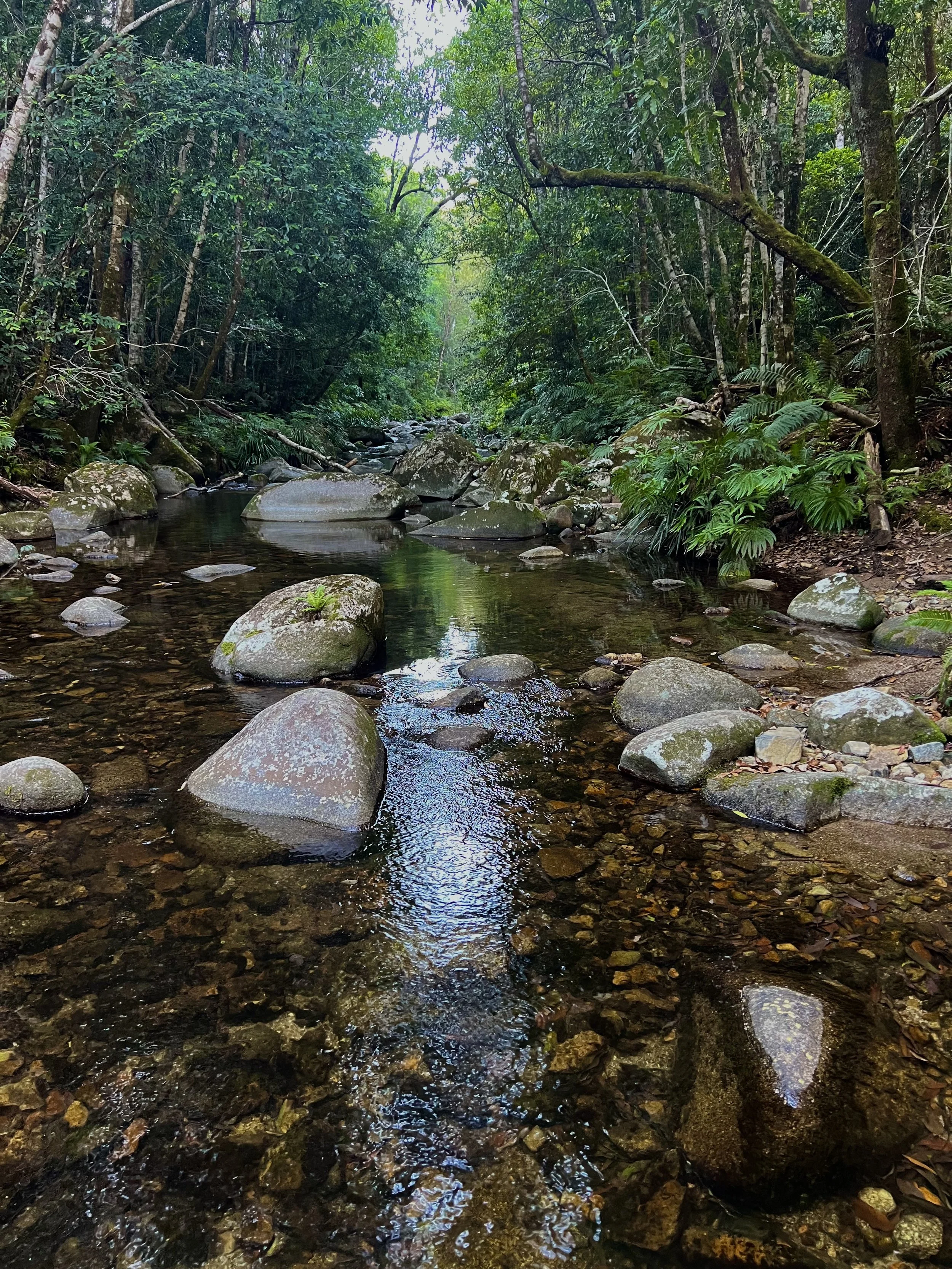
Combadjha Creek
Upon arrival everything seemed as I had hoped for. I was the only soul there. I parked the car and walked the thirty metres down to the creek. Paradise. Alone. A peculiar frisson of delight and waryness. I let myself breathe in the moment, taking in the ineffable scent of damp moss before crossing the small footbridge and walking another thirty metres up to the tent sites. Mine was farthest from the creek, as I had planned. It was cooler here than at the nearest town Glen Innes, which was an hour away. A fine rain had started, which bestowed the enveloping forest with an enchanting quality that put a grin on my face.
I returned to the car and brought back my tent gear and ducked into the gloomy forest glade that would be my home for the next six days. I started clearing small rocks and sticks from the best spot to pitch the tent and threw down the footprint. As I was putting in the second peg, I saw the first leech. Not perfect after all. And then I saw another and another. Paradise shattered. Suddenly, it all made sense. Next to a creek. Moist day. Was I the only person foolish enough to camp here? I dragged my stuff out onto the modest grass clearing about ten meters from the glade and started setting up again. A rather over-enthusiastic welcoming committee of tiny thornbills flitted around me. However, perhaps they were excited because to my horror, I noticed a leech looping its way toward me about a meter away. Do thornbills feast on leeches? Nonethgeless, little did the leech know that I had come prepared for battle. I quickly fetched my DEET spray, nuked the leech and tried to create a defensive ring around my tent. I sprayed my Crocs too. True, the bench table in the glade was decrepit and practically unusable, but the legions of leeches meant I would not be eating in my perfect little forest world anyway. Instead, the flat shelf of the boot of my old Corolla became my kitchen table.
I rose early next morning in still cool and damp air. Not a bad thing as I was to go in search of the Demon’s Fault, the official name for the geological scar I had become obsessed with seeing in reality. It would be a long slog up onto the plateau followed by a descent into a valley. I packed my lightweight one person tent and provisions in case I deemed it necessary to wild camp overnight. The weather had been forecast to warm up, and it was felt mid-morning as I finally reached the plateau. I cached a 1.5 litre bottle of water and soon after decided to park my heavy pack before the descent into the Demon’s Fault. The journey became increasingly precarious as my obsession started to feel ill-advised. The full psychological account of what transpired that day is told in a separate feature: ‘The Demon’s Fault’.
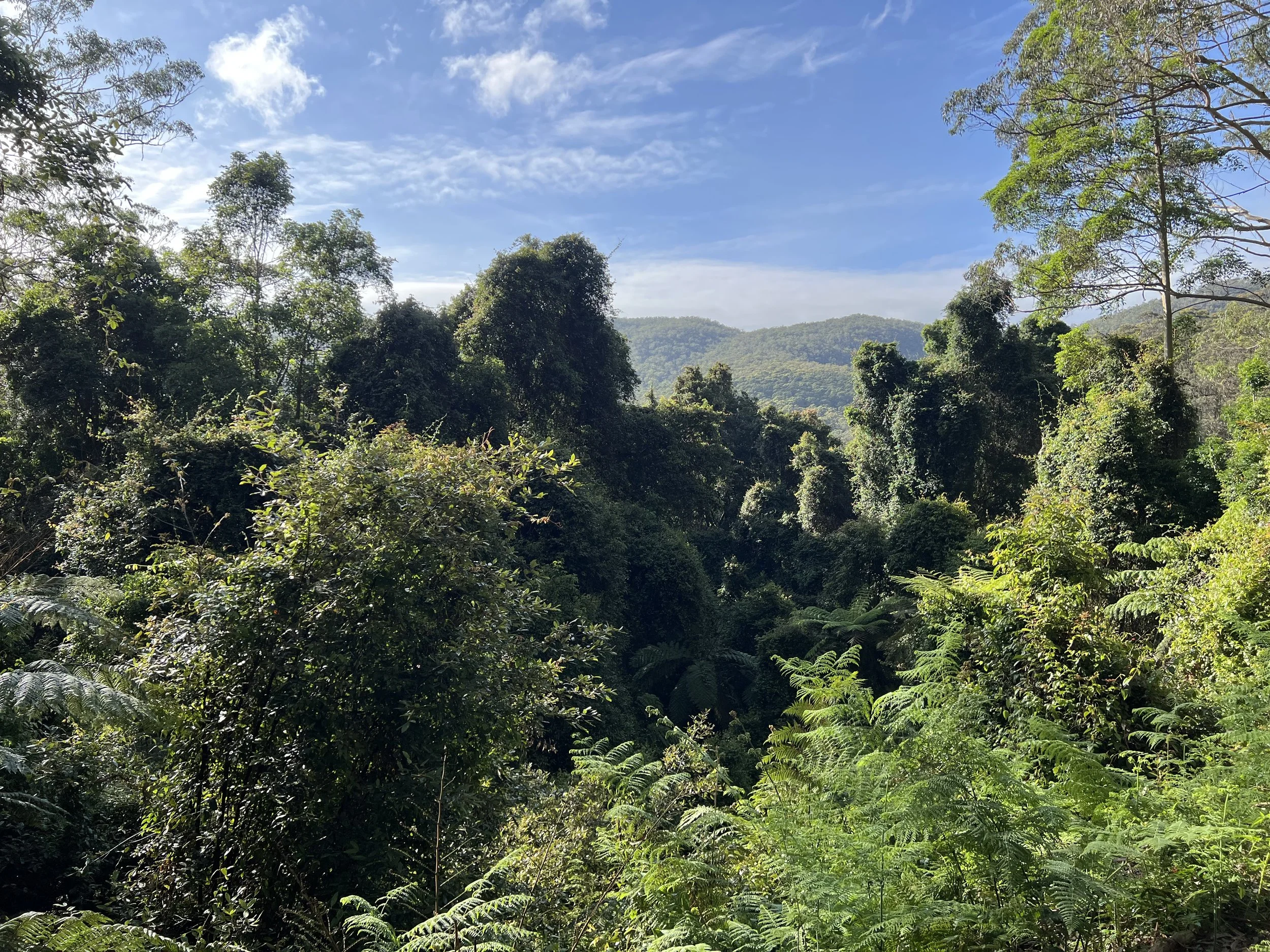
Lush forest early morning on the Demon Fault mission
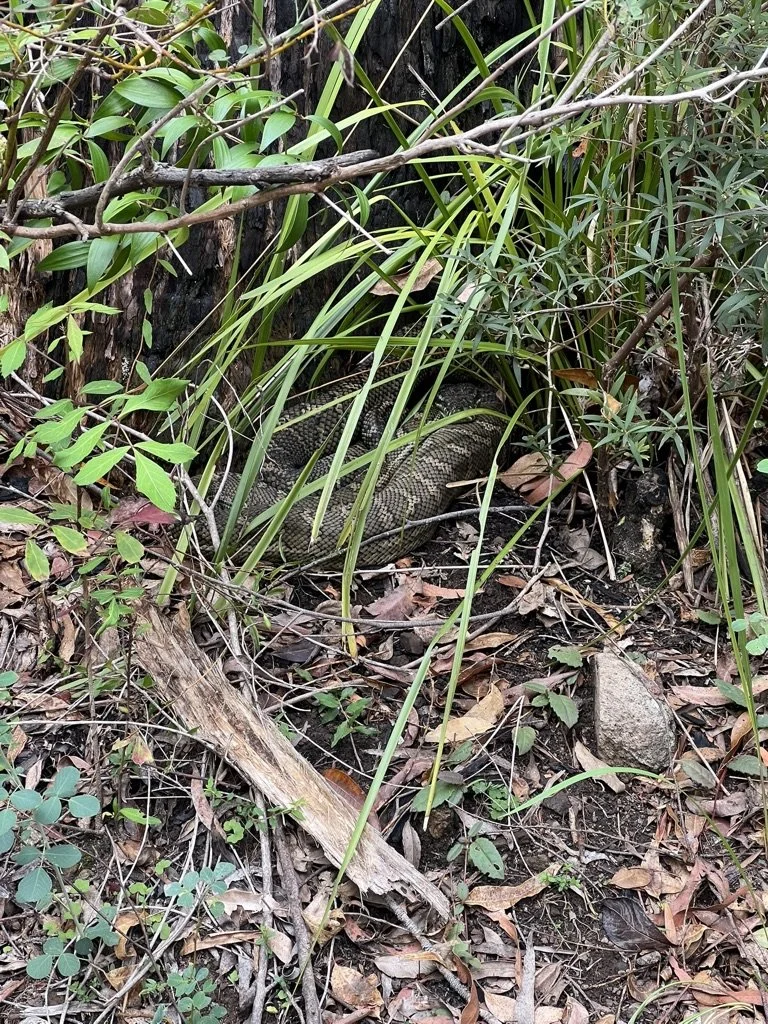
A carpet python I almost trod on.
Starting early next day to make use of the low rising sun, I drove a short distance to neighbouring Gibraltar Range NP for the Dandahra Crags walking track. Conditions were delightful and a welcome contrast to the previous day’s slog. Starting in a meadow of wildflowers festooned with spider webs glistening in the low sun, I made slow progress as I could scarcely walk a few metres without the urge to take photographs. The pesky presence of a huge horsefly or two could not detract from my increasingly joyous mood. Soon I was in the swamp area where a boardwalk had been provided, taking my time to best soak up this mesmerising environment.
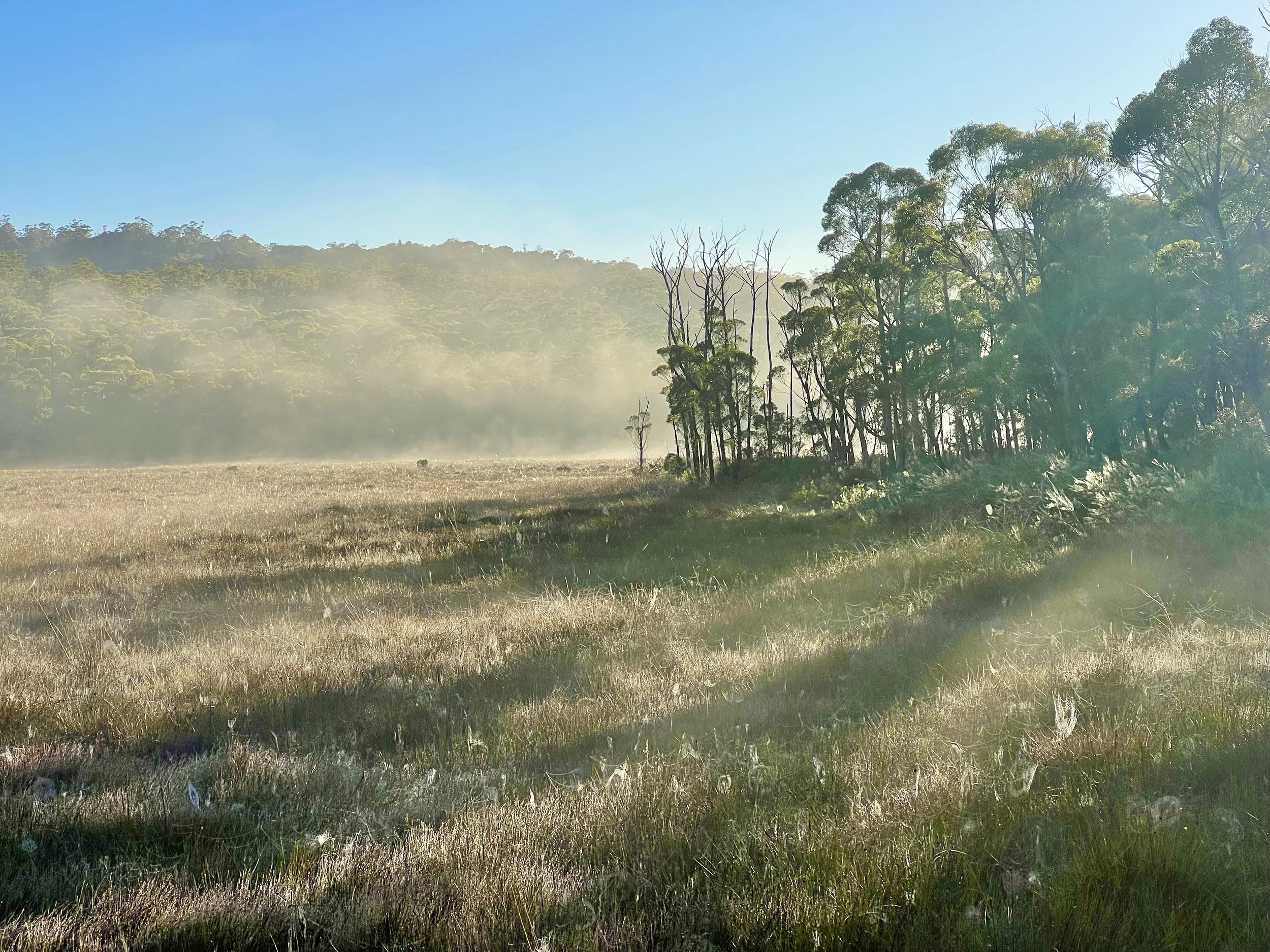
A gorgeous early start to the Dandahra Crags walk
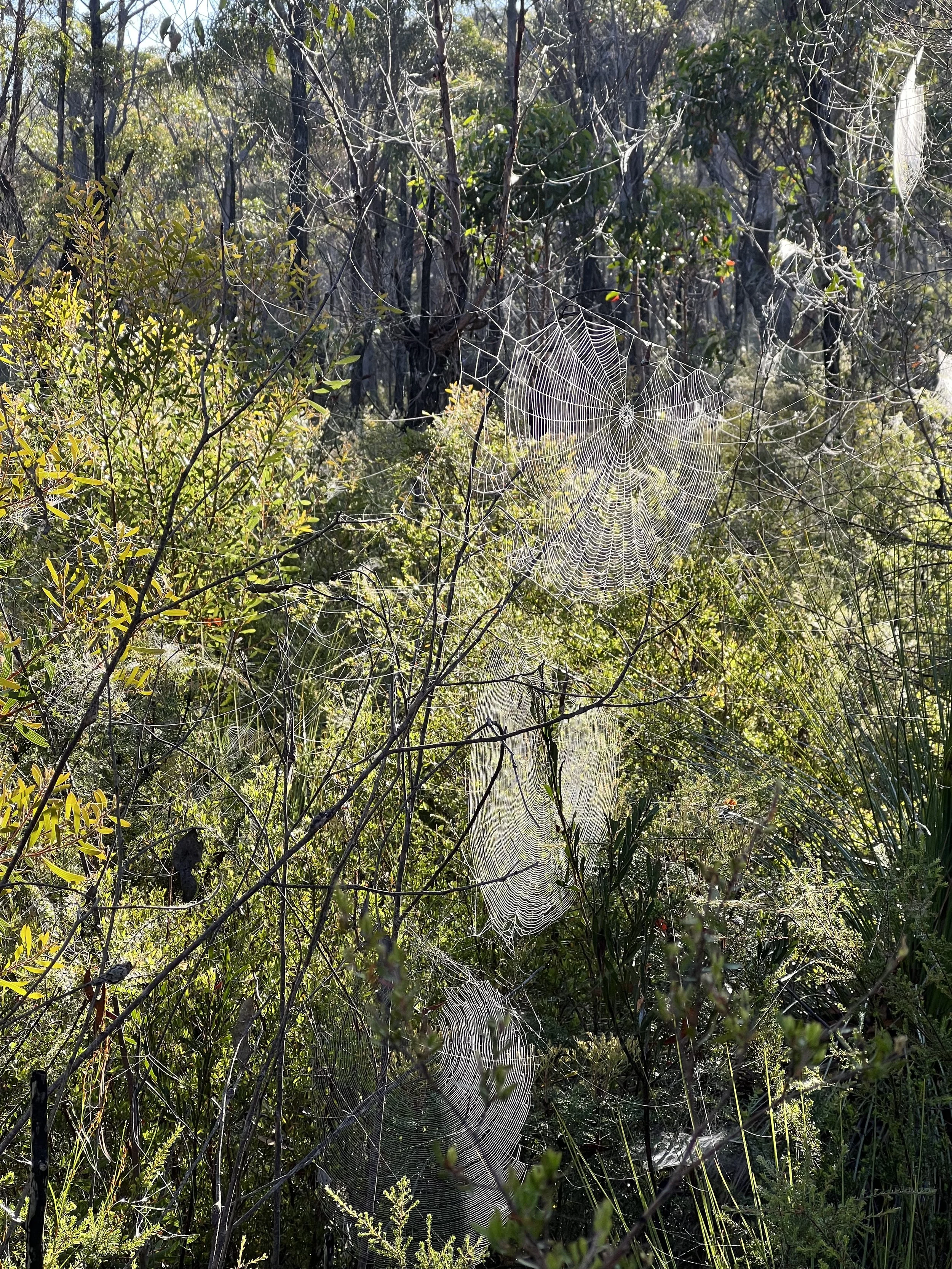
webs galore
After an hour I came to the turn off for the crag – a cluster of massive granite boulders formed into a small mountain of sorts. I grabbed a stick to help support myself and create noise as I pressed on up through some tricky bush, aware that snakes would unlikely be seen until trodden on. On the way up, I passed a Tasmanian couple coming down. The man wore gaiters and I made a mental note for a future purchase. After half-an-hour I broke free of the bush and beheld the cathedral-like monument in front of me. It was not too difficult to navigate the boulders and I reached the top with a feeling of having been transported into the past when First Peoples might have convened here for a ceremony or yarn. I relished my solitude however, spending an hour exploring every nook and awe-inspiring outlook. At some point, I sat still for ten minutes, simply letting my thoughts wander. It was that kind of special place that could be described as spiritual.
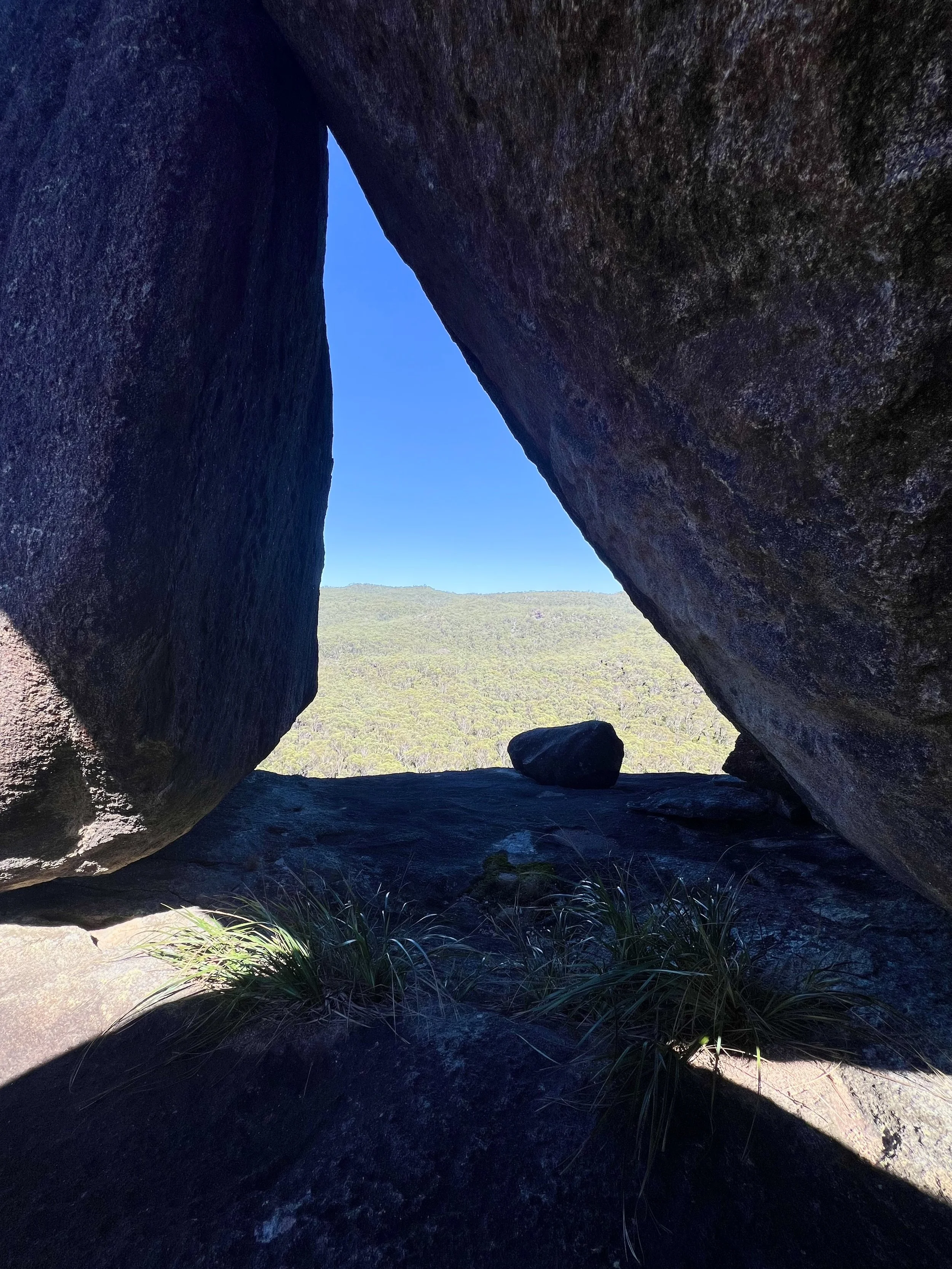
Serenity and awe atop the crag
For the signature Washpool Walking Track I decided to leave before sunrise to enhance the immersion of being in rainforest when it comes to life. I set off in the twilight anticipating the sun’s first rays breaking through the lush Gondwana forest. I was lucky enough to hear lyrebirds performing their exotic calls albeit out of sight. Gradually it lightened revealing ferns and twisted vines amidst coachwood and sassafras with the musty, earthy air redolent of Jurassic Park. There was a historic and magnificent stand of eleven red cedar trees - an intentional remnant of the logging era. The flora gradually changed as I angled up to the pungent air of gum forest. Taking lunch while sitting on a fallen tree, I felt again, that this was what I had come here for. Alone, but not lonely. Peace. Wonder. Awe.
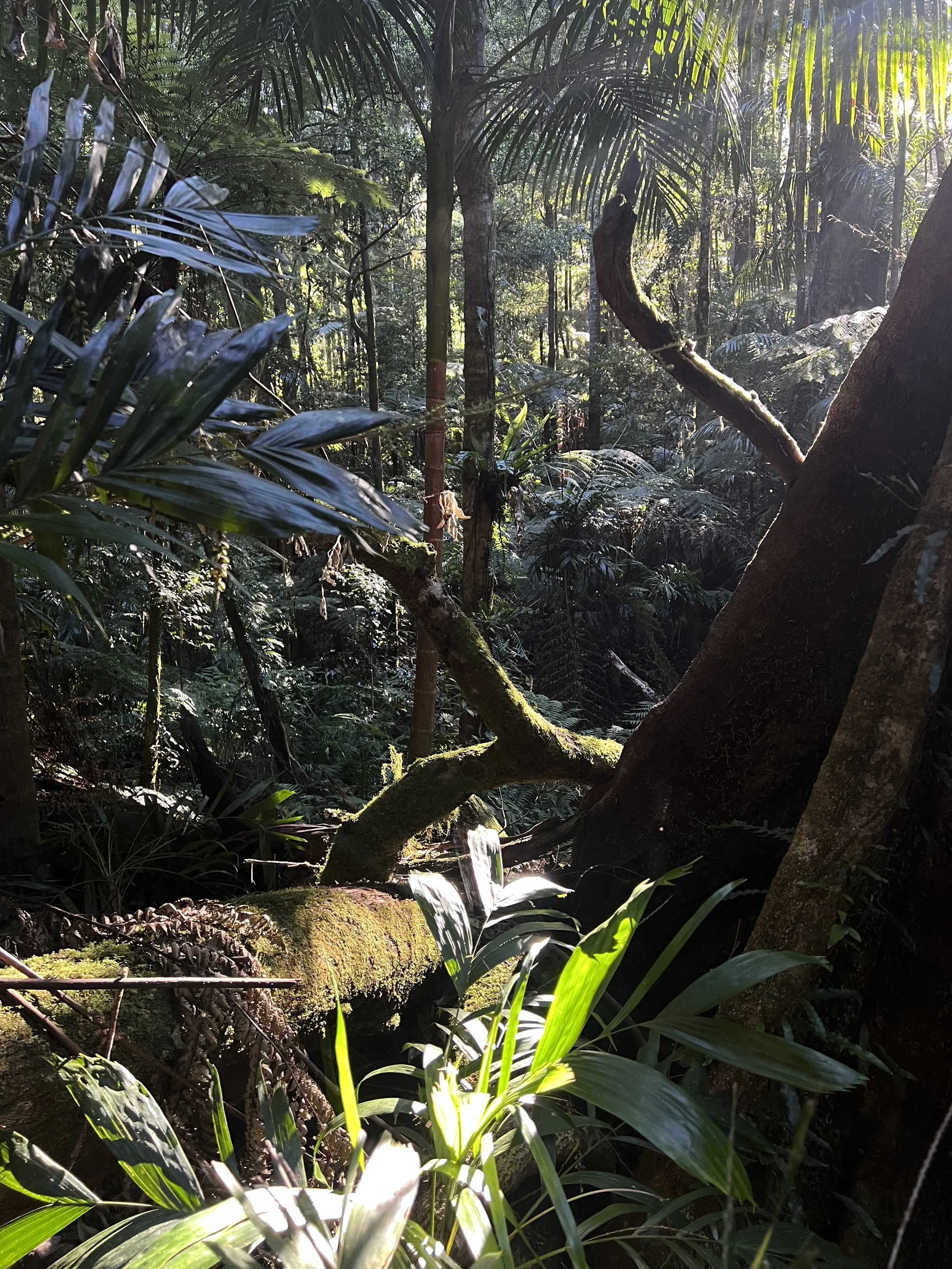
Hiding from T-Rex
I made my way back along the Coombadhra Creek, stopping many times to try and capture the magic in photos. With the increasing heat the creek looked tempting, but I knew there was an ‘official’ swimming spot not far from camp. After some three-and-a-half hours I emerged from the forest back into camp. It was only mid-morning, which gave me a wonderful sense of making the most out of time. Hot and sweaty, I changed my clothes for swimmers and headed off for a swim. What I found was a rainforest oasis. There was nobody around and I had not seen anybody all morning, so I stripped off with abandon and slipped into the cool water. Of course some people eventually turned up. Oh well, you cannot have it all to yourself all the time!
Back at base camp I had neighbours now! A guy hiking the multi day circuit and a lady spending two days in camp. Although I had wanted isolation and little or no human contact, I found conversation pleasant and welcome. It was interesting sharing hiking thoughts and tales and I ended up hiking the Crags again next day with the lady as I had enjoyed it so much the first time around. Later that evening, the Granite Lookout, a short drive from camp, provided a Turneresque sunset.
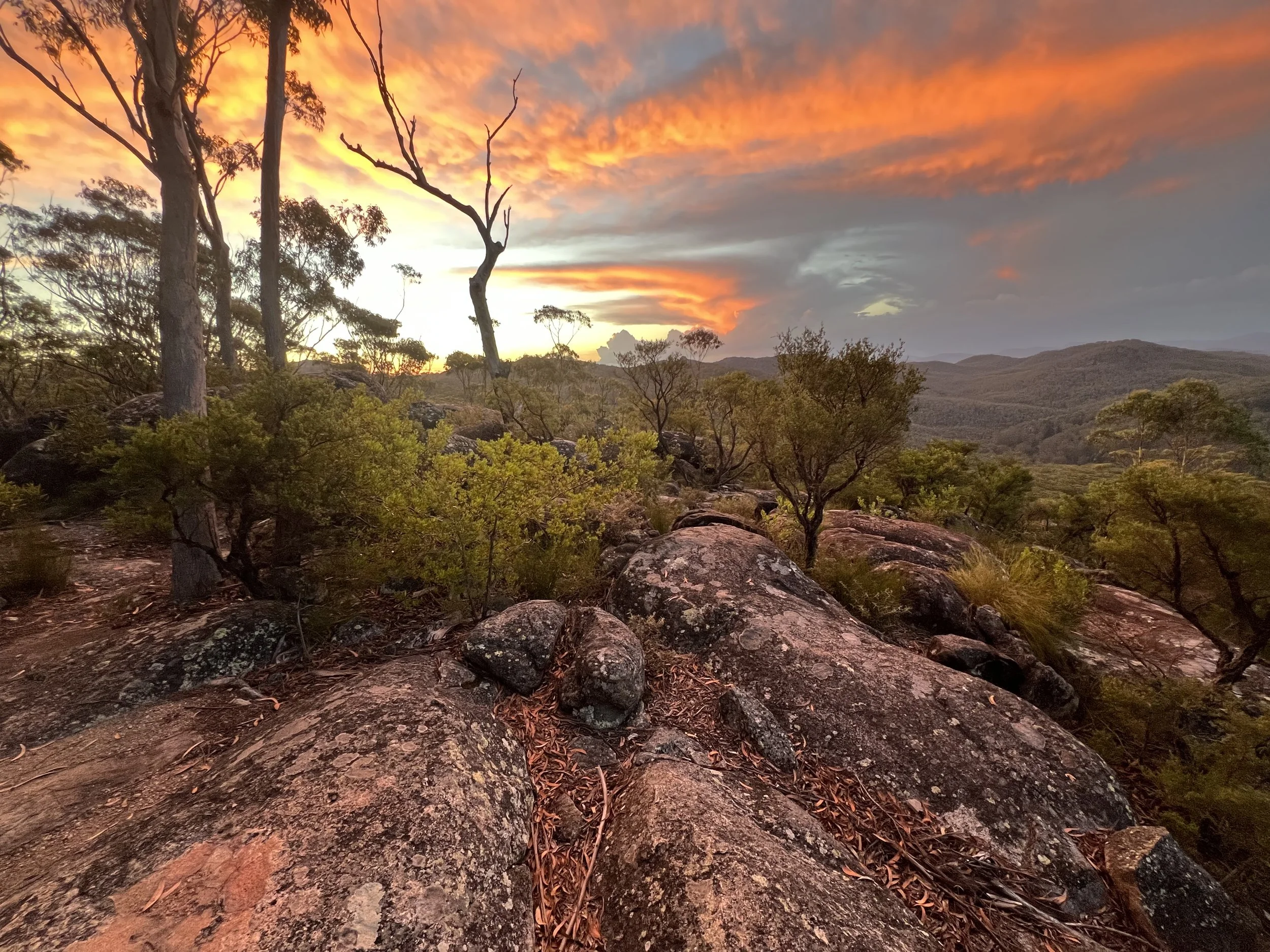
Nature’s oil painting
For my final day I decided to hike to the Haystack, another rock formation. I figured from the topo map I would be able to have a view of the Demon’s Fault, which I had failed to reach on that gruelling first day hike. I drove to the Duffer Falls campground early morning and headed off along a fire trail without a care in the world. I took a small side trip to check out Duffer Falls to see if it would provide a refreshing swimming spot on the way back. While descending to the falls, I bumped into the Tasmanian couple again, whom I had met scrambling up to the Dandahra Crags. We had a lovely chat and I learned that they also do volunteer weeding on some trails. They had just come from climbing The Haystack and told me it had epic views, but the trail was a little vague getting up there. They wished me luck…
I found the falls and several swimming spots which looked just what I would need in a few hours time. I doubled back and continued for an hour to the foot of the Haystack. They were right. I was also glad I had my hiking poles with me this time, as they not only helped me haul myself up the rough terrain, but also gave me confidence I could deal with snakes! It was hard going, but made somewhat easier by the small cairns that had been left by some previous climbers. I wondered if the Tasmanians had contributed to these small rock piles. In any case, I decided to do so and it seemed a good navigation practice. After an hour of effort I made the summit. They were not wrong. It was an epic view from up there amidst the roaring elements. Alone again on a stunning rock formation, flatter this time, I took my time to take it all in, especially the Demon’s Fault, which I could now see clearly in a superb perspective spreading out before me in the middle distance. I could see the ridge I had struggled with on the first day and where it descended into the valley I did not reach.
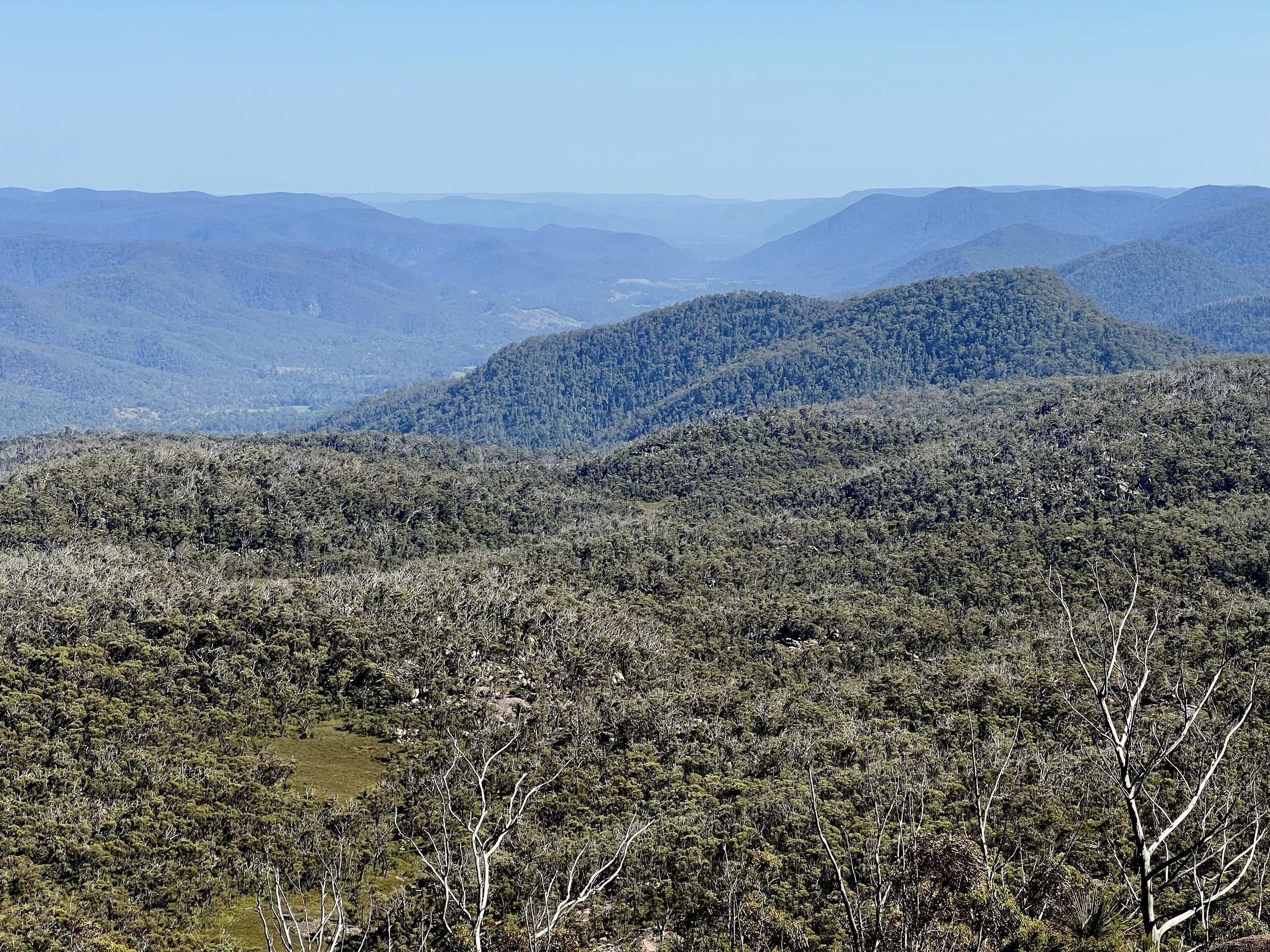
Just right of centre background the ridge I had attempted leading down to the Demon Fault
On the way back I deservedly stopped off at the swimming spot which was hot by then as it had been a long march in high sun. I found another couple in the pool. I apologised for interrupting their morning and promptly walked into the pool fully clothed. We spent a while bathing and chatting and I learned they were on a road trip around Australia. I could not think of a better area for them to stop in, based on my last six days here. We bade farewell and I hiked the remainder of the trail exhausted, yet with a lightness about my being. Back at camp I enjoyed a final evening of solitude, mostly sitting by the creek, my nostrils full of the scent of fungi and damp earth while listening to the early performance of the creatures of the night.
I awoke next morning to the sound of the resident lyrebird, whom I had seen up close but not singing. And while I could not see him this time, as I lay in my tent, rain fly off and sky blancemange, I listened to his glorious repetoire for ten minutes. It was a fitting goodbye from nature. A few hours later I left the campground, looking back several times. It was hard to leave.